Home › Walkway and Pathway Paving
Create safe, smooth access around your property with asphalt walkway paving in Raleigh, NC. We design and install asphalt paths for side yards, gardens, and backyard connections so family and guests can move comfortably in any weather.
Precision Asphalt Raleigh provides professional asphalt walkway paving throughout Raleigh, NC, North Carolina and the surrounding area. Our licensed, insured crew delivers safe, clean, on-time work with a free estimate before anything begins. Call (984) 254-6287 or request your free quote.
Asphalt Walkways and Paths Tailored to Raleigh Properties
Walkways and pathways seem simple, but they do a lot of heavy lifting on a property. They guide guests from the driveway to the front door, connect patios to sheds, and create safe, clean routes across lawns and common areas. At Precision Asphalt Raleigh, we focus specifically on asphalt walkway paving that fits the way homes, apartment communities, and small businesses in Raleigh really function.
A typical Raleigh home in neighborhoods like North Hills, Five Points, or Brier Creek often has a mix of older concrete slabs, stepping stones, or worn dirt paths. Asphalt can replace or connect those surfaces with a smooth, continuous route that is easier to maintain and safer to walk on, especially in wet weather. For townhome communities and HOA neighborhoods around Wake Forest Road or Glenwood Avenue, we often design looped walking paths that provide a comfortable walking circuit without eating up lawn or parking space.
Unlike big box solutions or basic handyman work, we look closely at how people actually move around your property. Do deliveries use the side yard often, do kids cut across to the neighbor’s house, is there a slope where people slip in the winter? We walk the site with you, flag trouble spots, and sketch path lines that solve real circulation problems instead of simply following the shortest line from point A to B.
How Our Walkway and Pathway Paving Process Works
Successful asphalt walkway paving starts well before the first load of asphalt shows up. When you call Precision Asphalt Raleigh, we begin with a site visit where we measure slopes, check drainage patterns, locate utilities, and look at existing hardscape like driveways, patios, and stoops. This is especially important in older Raleigh neighborhoods where yards may have been regraded or utilities rerun several times over the decades.
Once we understand the site, we mark out the path width and alignment with paint and stakes, and review it with you before any digging starts. For most residential walkways, we recommend a width between 3 and 4 feet, wide enough for two people to pass without feeling cramped. For community walking paths in apartment or HOA areas, 5 to 6 feet is more common to handle strollers, dog walkers, and joggers at the same time.
Next comes excavation. We remove grass, roots, and soft soil down to a stable subgrade, usually 4 to 8 inches depending on the soil and expected foot or light cart traffic. In parts of Raleigh with clay-heavy soils, especially east of downtown, we are careful to dig deep enough to get below the softest layer. If we hit pockets that pump underfoot or hold water, we either over-excavate and rebuild with stone or install a small French drain next to the walkway so the base does not stay saturated.
We then install and compact a crushed stone base, often ABC stone that compacts well under a plate tamper or small roller. This layer usually ends up 3 to 6 inches thick. Proper compaction is critical. If the base moves, the asphalt will crack or settle, so we compact in thin lifts and check for soft spots. In tight backyards where large equipment cannot reach, we use smaller compactors designed for pathway work.
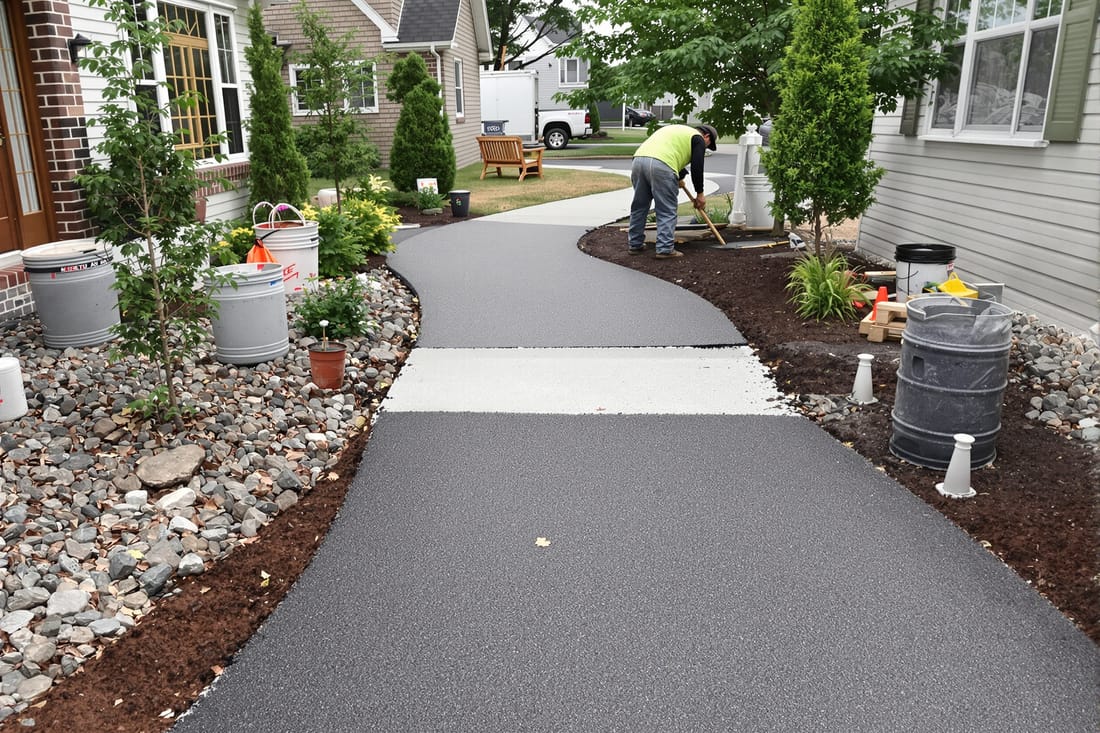
After the base is set, we place the asphalt. For walkways, a 2 to 3 inch compacted asphalt thickness is typical. We use a finer mix than we would for a driveway so the surface is smoother underfoot and easier to shovel or sweep. In straight, accessible sections we may use a small paver machine for a perfectly even mat. In tighter curves or near landscaping beds we use hand tools and lutes to shape the edges cleanly. We always build in a slight crown or cross-slope so water sheds to the side instead of pooling in the middle.
To finish, we roll the asphalt while it is still hot to lock the aggregate together and create a dense, even surface. Edges are trimmed and supported with soil or stone so they do not break off when someone steps near the sides. We then barricade the path and provide clear guidance on cure times, which are usually 24 hours for light foot traffic and a bit longer for carts or utility vehicles if the design allows them.
Design Options for Asphalt Walkways That Look Finished, Not “Temporary”
Asphalt walkways do not have to look like a driveway strip dropped through the grass. There are several design choices that can make your path look intentional and attractive while staying practical and cost effective.
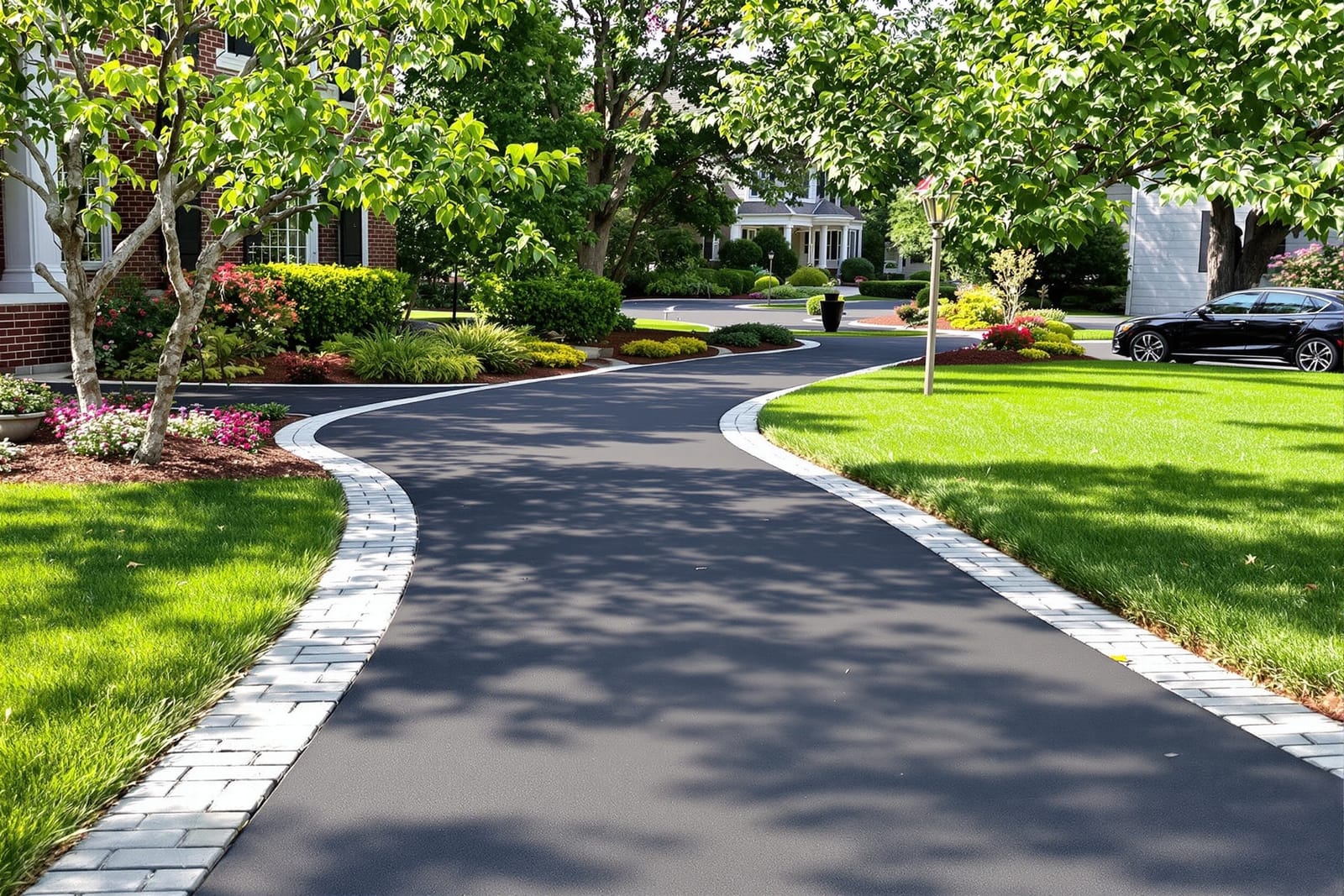
We often start with layout. Straight runs work well alongside driveways or property lines, but gentle curves tend to look better as garden paths or routes from the front door to a side gate. Curves also help navigate around large trees that are common in established Raleigh neighborhoods without cutting into roots. Where a grade change is needed, we can incorporate small landing areas or combine asphalt with short masonry steps to keep the walking surface comfortable and safe.
Edge treatments make a big difference in appearance and durability. For a simple backyard path, we might compact topsoil up against the asphalt edge and reseed, creating a clean transition once the grass fills in. For more formal front walks or HOA common paths, we often recommend concrete, brick, or decorative block edging that keeps mulch and gravel out of the path and prevents the asphalt edge from raveling over time. Metal landscape edging is another option where a slim, modern look is preferred.
Color and texture can be customized more than most people realize. While traditional black asphalt is the most economical choice, we can use a finer aggregate mix for a smoother, almost seamless finish that pairs nicely with modern or brick homes. In higher-visibility commercial settings like office parks or churches, we can discuss sealers with tint additives or surface treatments that visually differentiate walking paths from drive lanes for added safety.
Lighting and accessibility are also part of the design conversation. For clients on hilly lots off Falls of Neuse Road or in West Raleigh, we pay close attention to slope so the walkway is comfortable for older family members. We aim to keep slopes within accessibility guidelines where possible and can add small handrails at steeper segments near entrances. We also coordinate with your electrician or landscape lighting contractor so path lights, conduit routes, and junction boxes line up with the final walkway layout before paving, not after the asphalt is in place.
What Affects the Cost of Asphalt Walkway Paving in Raleigh
Homeowners often ask why two walkways that look similar on paper can be priced very differently. Precision Asphalt Raleigh is open about what drives the cost so you can make informed decisions and adjust the design where it matters.
The first big factor is access. A straight path along a driveway where we can bring in machines and materials easily is more economical than a narrow backyard where everything must be moved by wheelbarrow. Many Raleigh lots have fenced yards, tight side setbacks, or significant elevation changes from street to backyard, which can increase labor time.
Soil and drainage conditions are the second major driver. If your property sits on relatively stable, well-drained soil, we can often use a standard base depth and process. In low areas that stay wet after storms or in spots with heavy clay, we may need additional base depth, geotextile fabric, or simple drainage features so the walkway lasts. This adds some material and labor cost upfront but usually pays off in fewer repairs over the years.
Path length and width are obvious cost factors, but shape and detailing matter too. Curved paths, intersections, and tie-ins to steps, stoops, or patios require more hand work and fine grading than a simple straight run. If you choose decorative edging, integrated drainage grates, or transitions to pavers or stone, we plan extra crew time for those interfaces so they look correct and do not trap water.
Site preparation can also influence budget. Removing old concrete slabs, broken pavers, or thick roots from mature trees around inside-the-beltline homes near Cameron Village takes more time than starting on open lawn. We discuss these conditions after the site walk so there are no surprises once we begin. Our estimates break out the major cost components so you can see how choices like width, edging style, or route affect the total.
Finally, timing and phasing can help control cost for larger projects, such as multi-path systems in townhome communities or apartment complexes. We can sometimes schedule work in phases to minimize disruption and make the budget easier on HOAs, while still keeping mobilization costs reasonable by grouping similar work together.
Local Considerations, Maintenance, and How Precision Asphalt Raleigh Helps Long Term
Raleigh’s climate and soils create specific challenges for walkway and pathway paving. We see hot summer sun that can oxidize asphalt if it is thin or poorly compacted, winter freeze-thaw cycles, and the occasional heavy storm that will quickly expose any drainage mistakes. Precision Asphalt Raleigh builds walkways with these realities in mind instead of copying designs better suited to cooler or drier regions.
Thermal movement and occasional frost heave can cause cracking over time, especially in shaded, damp areas. To reduce this risk, we focus on solid base construction and positive drainage, and we avoid trapping water along the edges by grading soil correctly and leaving outlets for runoff. In wooded neighborhoods around North Raleigh, we also talk frankly about tree roots. Where possible, we route paths outside the main root zones of large oaks and maples. If a root is already high and visible, we discuss options such as adjusting the path, carefully shaving and bridging the area, or using a different surface in that one small section.
Maintenance for asphalt walkways is relatively simple compared to pavers or untreated gravel. We suggest regular sweeping, quick removal of leaves in fall to prevent staining and moss growth, and occasional edge trimming so grass does not creep over the asphalt and trap moisture. For heavily used community paths, adding a sealcoat after the first year and then every few years can help slow oxidation from sun exposure and keep the surface looking uniform. We advise on whether sealcoating is truly beneficial in your specific situation instead of recommending it as a one-size-fits-all answer.
When you work with Precision Asphalt Raleigh, you are not just getting a one-day installation crew. We document the materials and thicknesses used on your job, which makes future touch-ups, extensions, or tie-ins far easier and more consistent. If you later add a new patio, deck, or accessory dwelling unit and want to connect it with a new path, we can match the existing section in appearance and performance.
Before you commit to any asphalt walkway paving project, it is worth walking the property with a contractor who knows Raleigh neighborhoods, not just asphalt in theory. We encourage questions about base depth, drainage plans, and how the path should age over the next 10 to 15 years. Our goal is a walkway that fits how you actually use your property, stands up to our local conditions, and still looks like it belongs there when your landscaping grows and your needs change.