Home › Road, Street, and Municipal Paving
Keep traffic moving smoothly with professional road paving in Raleigh, NC. We construct and resurface subdivision streets, municipal roads, and access routes with engineered asphalt designs that handle heavy use and local conditions.
Precision Asphalt Raleigh provides professional road paving throughout Raleigh, NC, North Carolina and the surrounding area. Our licensed, insured crew delivers safe, clean, on-time work with a free estimate before anything begins. Call (984) 254-6287 or request your free quote.
Road, Street, and Municipal Paving in Raleigh, NC
Safe, durable streets are a basic part of everyday life in Raleigh, and at Precision Asphalt Raleigh we focus our entire road paving process on how people actually use those roads. School traffic in the morning, city buses, emergency vehicles, delivery trucks, and neighborhood walkers all place different demands on pavement. We design and build each project so it fits the specific block, corridor, or facility we are working on, not a one size fits all standard.
We work with municipalities, HOAs, private road owners, business parks, and small developers throughout Raleigh and surrounding Wake County. Our team is familiar with City of Raleigh and NCDOT expectations, from subgrade preparation and asphalt mix designs to striping layouts and ADA access. Whether we are rebuilding a cut up residential street or adding a turning lane in front of a commercial site, we coordinate closely with local officials and property owners so the finished pavement actually works for the people who live and drive here every day.
Because our crews live and work in this area, we plan road paving around Raleigh’s weather patterns. Summer heat, hurricane season rain, and the occasional winter freeze all affect when and how asphalt should be installed. We adjust start times, compaction methods, and curing expectations accordingly so the surface performs well through our specific climate, not a generic textbook scenario.
How Our Road Paving Process Works, Step by Step
Good road paving starts below the surface. First, we evaluate existing conditions, including traffic type, base thickness, drainage, and current failures such as alligator cracking or rutting. On older Raleigh streets, especially in neighborhoods inside the Beltline, we often find thin asphalt over mixed soil. In those cases we recommend reclaiming and rebuilding the base instead of simply adding another overlay that will fail in a few years.
Subgrade and base preparation come next. We proof roll the subgrade with heavy equipment to locate soft spots, then undercut and replace those areas with compacted stone if needed. For municipal or busier streets, we typically install and compact graded aggregate base stone to specific thicknesses that match expected traffic, often 6 to 8 inches or more. Proper drainage is built in by shaping the road crown and setting appropriate cross slopes so water runs off instead of soaking in.
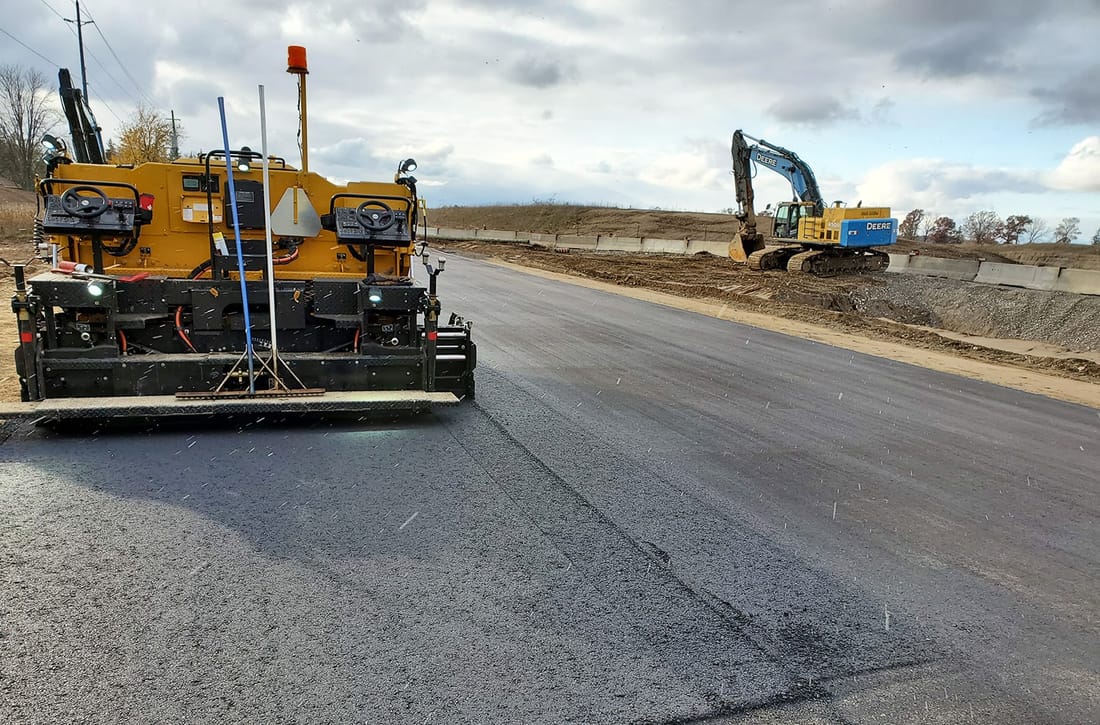
The asphalt paving phase follows a clear sequence. Tack coat is applied between lifts so each new layer bonds to the one below. We place the asphalt with a paver that controls slope and grade, then compact it immediately with steel and rubber tire rollers while the mix is still in the right temperature range. For collector streets or industrial park roads, we often use a two course system, a stronger base course mix followed by a surface course with finer aggregate that gives a smoother ride. Our foreman continually checks thickness and density so the finished road meets the design instead of relying on guesswork.
Choosing Asphalt Mixes and Pavement Thickness for Raleigh Roads
Not every road paving job can use the same asphalt mix. At Precision Asphalt Raleigh we select mixes based on traffic loading, turning movements, and expected maintenance cycles. A quiet cul de sac off Falls of Neuse will not need the same structure as a cut through street near Capital Boulevard that sees heavy delivery trucks and constant braking.
For low volume residential streets, we usually recommend a full depth asphalt section or asphalt over an aggregate base that provides enough strength for garbage trucks and moving vans without being overbuilt. For routes that handle buses or repetitive truck traffic, we adjust the design to include thicker asphalt lifts and mixes with harder aggregate and more stable binders to resist rutting in summer heat.
Local temperature swings are part of the design conversation. Raleigh gets hot summer pavement temperatures that can soften the asphalt, followed by the occasional freeze that can open cracks if water has penetrated the surface. We take that into account when choosing binder grades and lift thicknesses so the road surface is flexible enough to handle minor movement but stiff enough to resist ruts, shoving at intersections, and wheel path depressions.
If you already have engineer stamped plans, our engineers and estimators will build to that design and help you understand where there may be options to improve performance or manage cost, such as adjusting asphalt thickness or upgrading the base in critical turning or loading areas.
Scheduling Road Work Around Raleigh Traffic and Weather
Planning is critical for any road, street, or municipal paving project that affects daily life. Before work starts, the Precision Asphalt Raleigh team develops a phasing and traffic control plan that fits the location. On neighborhood streets, we typically use short segments and staggered closures so residents can still reach driveways and mailboxes. For busier collectors and commercial corridors, we coordinate with the City of Raleigh or property managers to set detours, off peak lane closures, or night work when appropriate.
Weather timing is especially important for road paving in Raleigh. Heavy summer storms can ruin a fresh mat, so we schedule asphalt placement within reliable dry windows and keep a close eye on radar. In cooler months, we adjust work hours to preserve mix temperature during hauling and compaction so density targets can still be reached. If a cold front or tropical system is approaching, we may shift from full depth paving to prep work, milling, or base repairs rather than risk placing asphalt in marginal conditions.
Communication is part of our process. Before we mobilize, we provide notices that outline dates, times, parking restrictions, and access plans. On multi day projects we update residents or facility managers if weather forces changes. This reduces confusion and keeps traffic moving as smoothly as possible while work is in progress.
Cost Factors Specific to Road Paving in Raleigh
Many property owners and managers ask why road paving prices can vary so much from one project to another. The biggest drivers are structure and access. Pavement thickness and base depth have a direct impact on cost, and they must match real traffic demands. A private drive that only serves cars can be thinner and less expensive. A shared access road that sees frequent box trucks or tractor trailers must be designed and priced for that heavier loading.
Existing conditions also matter. Roads with widespread base failures, deep potholes, or poor drainage cannot be cost effectively fixed with a thin overlay. Those require milling to remove weak material, patching or undercutting, and sometimes full depth reclamation. While that adds upfront cost, doing it right prevents having to repave again in just a few years.
Logistics around Raleigh can influence pricing as well. Haul distance from the asphalt plant to the job site affects trucking time and fuel. Tight downtown or campus projects might need smaller equipment or night work, which changes crew productivity and labor. There are also line items beyond the asphalt itself, such as traffic control, temporary striping, permanent markings, and adjustments to manholes and water valves so they sit flush with the new surface.
When Precision Asphalt Raleigh prepares a proposal, we break out these elements so you can see where your money is going. We can often present options, such as phased work over several budget years or targeted reconstruction of the worst segments combined with a more economical overlay on the remaining sections.
Common Road Problems in Raleigh and How We Fix Them
Roads in Raleigh tend to fail in predictable ways that are closely tied to our soils and weather. One frequent issue is localized base failure where clay soils and trapped water undermine the pavement. You see this as spiderweb or alligator cracking, sometimes with slight pumping when a truck passes. Our repair approach is to cut out those sections, rebuild the base with rock, then repave so the problem does not reappear a few months later.
Rutting in wheel paths is another common concern, especially on routes that carry buses, trash trucks, or delivery vehicles. In these cases we look at both the asphalt structure and the underlying base. If the base is sound, we mill down through the deformed asphalt and install a stronger mix in thicker lifts. If the base is also moving, we address that first so we do not simply mirror the rutting back into the new surface.
Drainage related problems show up as potholes after storms, edge cracking, and early raveling where water repeatedly sits on the pavement. We correct those by improving cross slope, cleaning or adding ditches and inlets, and sometimes regrading shoulders. Good drainage is especially important in older neighborhoods where original road crowns have been lost through multiple overlays.
For municipal and institutional clients, we also help build maintenance plans. That might include periodic crack sealing, patching in high load areas, and timely resurfacing before the road reaches a point where full reconstruction becomes the only option.
Working With Precision Asphalt Raleigh on Your Next Road Project
Whether you are responsible for a small private access road, a busy church entrance, or an entire subdivision street system inside Raleigh, the first step is a site visit. We walk the pavement, measure distress, look at drainage paths, and ask about traffic patterns, trash pickup, deliveries, and school schedules. This lets us tailor a road paving plan that fits how your road is actually used.
We can then provide a written scope that outlines proposed repairs, paving thickness, material types, traffic control, and schedule. For municipal work, we are comfortable coordinating with engineers, inspectors, and utility providers so utility adjustments, inspections, and testing do not slow progress. For HOAs or boards, we can attend meetings or supply clear summaries so non technical decision makers understand their options.
Because road paving affects so many people at once, we put a strong focus on safety and communication during the project. Barricades, cones, flaggers, and signage are used not just to meet standards but to keep drivers, pedestrians, and our crews out of harm’s way. We maintain access for emergency services and coordinate trash and mail delivery whenever possible.
If you are planning road, street, or municipal paving in Raleigh or nearby communities, Precision Asphalt Raleigh is available to inspect your pavement, explain what is really happening beneath the surface, and recommend a practical, locally informed solution that will serve your residents, customers, and vehicles for years.