Home › Industrial and Heavy-Duty Asphalt Paving
Handle heavy loads with confidence using industrial asphalt paving in Raleigh, NC. We design thick section pavements and reinforced bases for truck yards, loading docks, and warehouse aprons so your surface stands up to frequent turning and static loads.
Precision Asphalt Raleigh provides professional industrial asphalt paving throughout Raleigh, NC, North Carolina and the surrounding area. Our licensed, insured crew delivers safe, clean, on-time work with a free estimate before anything begins. Call (984) 254-6287 or request your free quote.
Industrial Asphalt Paving Built for Raleigh Workloads
Industrial and heavy-duty asphalt paving is not the same as paving a small parking lot. At Precision Asphalt Raleigh, we design pavements to carry constant truck traffic, loaded forklifts, trailers, and service vehicles that are common at distribution centers, plants, and terminals in the Raleigh area. That means heavier stone bases, thicker asphalt lifts, and properly engineered mixes that can handle turning, braking, and static loads without rutting.
We start every industrial asphalt paving project with a site visit, not a rough estimate over the phone. On site, we look at how trucks move, where they queue, how forklifts cross expansion joints between building slabs and asphalt, where standing water shows up now, and what type of subgrade soil you have. Around Raleigh and the Triangle, we frequently see red clay that holds water, so we pay particular attention to drainage and subgrade stability before talking about thickness or pricing.
How We Design Heavy-Duty Pavement Structures
For industrial asphalt paving, thickness and structure are what matter first. Precision Asphalt Raleigh typically uses 8 to 12 inches of compacted stone base for heavy truck courts, sometimes more where the subgrade is soft. On top of that, we often install a 3 to 4 inch binder course and a 2 to 3 inch surface course, using different asphalt mixes for each layer based on how the pavement will be used.
In loading docks, dumpster pads, and drive lanes where trucks sit or turn sharply, we may recommend reinforcing the asphalt with extra thickness or even a concrete crossover, then tying it into the asphalt with proper joints. For forklift lanes around warehouses, we pay attention to smoothness and joint locations to prevent impact damage to equipment. These details affect cost, but they also prevent premature failures that are more expensive to fix later.
We work with local mix suppliers around Raleigh to specify industrial-grade mixes with higher stone content and the right binder grade for our climate. Summers are hot and humid here, which can cause rutting in underdesigned pavements, and winter freeze-thaw cycles can open up weak joints. Using the right mix and structure from the start avoids those issues.
Step-by-Step: Our Industrial Paving Process
Every heavy-duty project goes through a defined process so you know what to expect and so we avoid unnecessary shutdowns of your operation.
1) Evaluation and coring if needed. For replacements, we may take cores of your existing asphalt to see actual thickness and condition. This tells us whether full-depth removal is required or whether a stabilized base can be reused.
2) Demolition and subgrade preparation. We remove failed asphalt, unsuitable base, and any organic or soft material. In the Raleigh area, we often encounter pockets of soft clay or undercut areas that must be bridged or stabilized with additional stone and compaction.
3) Grading and drainage. Using laser-guided equipment where needed, we set slopes so water runs to inlets or swales and not toward loading docks or door thresholds. Many problems we are called to fix, like standing water at dock doors or ice sheets in winter, come from poor grading rather than thin asphalt.
4) Base installation. We place graded aggregate base in lifts, compacting each layer with heavy rollers to achieve proper density. For industrial work, this phase takes time because a weak base will show up as ruts and depressions once trucks start using the pavement.
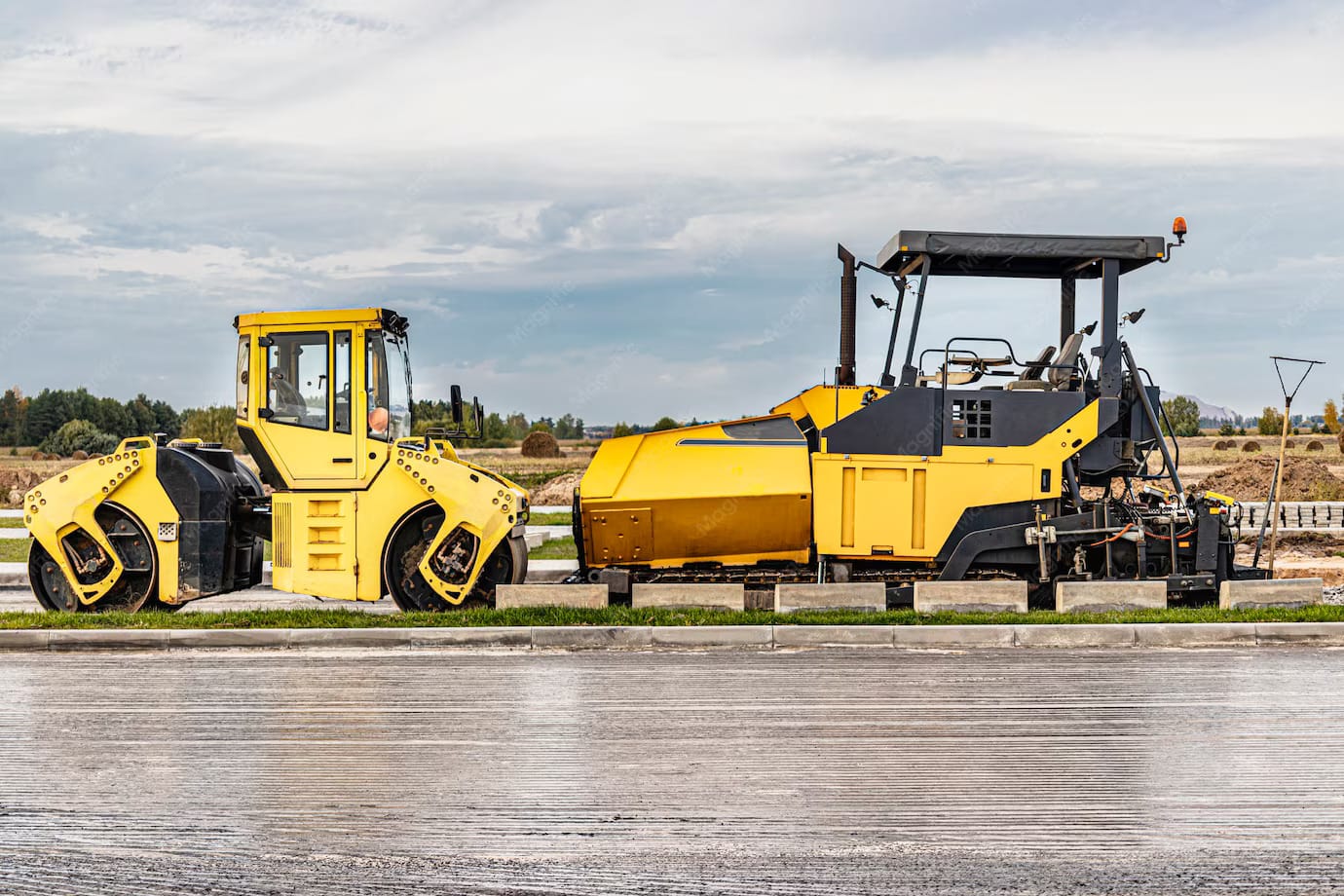
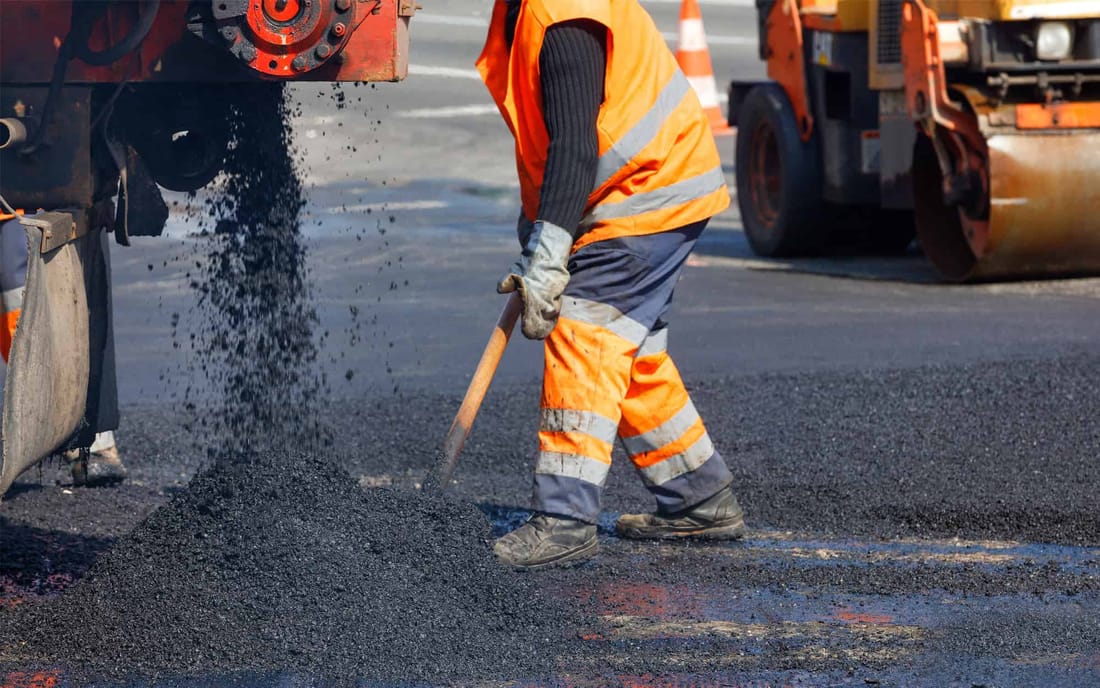
5) Asphalt paving. We install binder and surface courses with commercial pavers, not just skid steers or small machines. Joints are staggered and compacted hot-on-hot where possible to avoid cold joints that unravel. Rolling patterns are chosen to achieve density while maintaining smoothness for forklifts and pallet jacks.
6) Striping, signage, and re-opening. Once cooled, we apply industrial-grade striping and any required markings for truck lanes, trailer parking, and fire access. We work with your operations team so re-opening areas can be phased and downtime kept to a minimum.
Cost Drivers and Budget Planning for Heavy-Duty Work
Industrial asphalt paving is a capital expense, and the cost is driven by factors you should understand before you approve any proposal. Thickness is one of the biggest drivers. Adding 2 inches of asphalt across a large truck court can add a noticeable amount, but it can also double the pavement life under heavy loads if the base and mix are correct.
Subgrade conditions are another major factor. In parts of Raleigh and Garner, we often need to undercut soft spots or add stabilization. That can change the project cost and schedule, which is why Precision Asphalt Raleigh flags these issues early, often during the first visit. Drainage improvements, like new inlets, swales, or regrading, will also influence pricing but can eliminate chronic maintenance problems.
Access and phasing matter too. Working in tight yards, active plants, or 24-hour distribution centers requires night or weekend work and careful staging. That can raise labor costs but allows you to keep operating. We routinely plan projects in phases so that truck routes remain open, even if it takes a few extra days.
To help with budgeting, we can provide options like a base bid for full heavy-duty construction in primary traffic paths and a lighter section for overflow or employee parking. That way you invest the most where the loads are highest, instead of overbuilding every square foot.
Common Industrial Pavement Problems We Solve in Raleigh
Most calls Precision Asphalt Raleigh receives from industrial and logistics clients in the Triangle relate to a handful of recurring issues. Rutting in truck lanes is common where mixes were not designed for high temperatures and heavy loads. We address this by milling out the rutted areas, correcting any base failures, and replacing with thicker, higher-stone asphalt mixes.
Another frequent problem is edge failure at concrete loading docks, dumpster pads, and building aprons. When asphalt is placed thin against concrete without proper support, it breaks down under wheel loads. Our approach is to demo failed edges, rebuild the base, and either thicken the asphalt or create reinforced transition details that can handle repeated impacts from trailers and forklifts.
Poor drainage is also a major issue. Standing water accelerates cracking and rutting and creates safety hazards. We often regrade small sections or install additional drains to eliminate ponding. In areas where heavy trucks always follow the same path, like entrance drives or scale approaches, we may suggest reinforcing those strips with additional thickness or a different surface treatment to extend service life.
We do not recommend one-size-fits-all fixes. Instead, we assess how your specific facility operates, where your heaviest traffic is, and what your maintenance tolerance is, then propose targeted solutions that match reality on the ground.
What Raleigh Facility Managers Should Ask Before Hiring
Choosing a contractor for industrial asphalt paving in Raleigh should involve more than asking for a square-foot price. Before hiring anyone, ask for their proposed pavement section in writing: stone base depth, asphalt lift thicknesses, and mix types. If a bidder cannot explain why they chose those numbers based on your traffic and soil conditions, you may be looking at a light-duty design that will not hold up.
Ask how they will verify compaction of both base and asphalt. Precision Asphalt Raleigh follows compaction targets and adjusts rolling patterns when field conditions change. Poor compaction is one of the biggest causes of premature failure, and it is something many owners never see because it is hidden below the surface.
You should also discuss phasing and access control. For active industrial sites, we create traffic control plans, coordinate with your shipping schedule, and lay out clear timelines for when each section can be driven on. We understand that many Raleigh facilities cannot simply shut down for a week while paving is done.
Finally, review the maintenance plan. A quality industrial pavement includes a realistic expectation for crack sealing, sealcoating where appropriate, and periodic milling and resurfacing on main drive lanes. When you know in advance what the next 10 to 15 years of care will look like, you can plan budgets and avoid surprise failures. Precision Asphalt Raleigh is available for periodic inspections so small issues are caught before they disrupt operations.