Home › Asphalt Sealcoating & Crack Filling
Protect your driveway investment with asphalt sealcoating in Raleigh, NC. We clean, crack fill, and apply commercial grade sealcoat to shield your blacktop from water, UV, and oil damage so it stays smooth and black longer.
Precision Asphalt Raleigh provides professional asphalt sealcoating throughout Raleigh, NC, North Carolina and the surrounding area. Our licensed, insured crew delivers safe, clean, on-time work with a free estimate before anything begins. Call (984) 254-6287 or request your free quote.
Asphalt Sealcoating & Crack Filling for Raleigh Properties
At Precision Asphalt Raleigh, we treat asphalt sealcoating and crack filling as a long-term investment in your driveway or parking lot, not a quick cosmetic touch-up. In our climate around Raleigh, with hot sun, surprise winter freezes, and plenty of rain, unprotected asphalt can dry out, crack, and ravel in just a few years. A well-planned sealcoat and crack repair schedule can easily double the life of your pavement and save you from early replacement.
Our team focuses on residential driveways, commercial parking lots, and small private roads throughout Raleigh, Cary, Garner, Knightdale, and nearby communities. We schedule work around your business hours, HOA rules, and neighborhood traffic so your normal routine is disrupted as little as possible. Whether your pavement is 1 year old or 15 years old, we tailor the approach to what your surface actually needs, instead of trying to sell a one-size-fits-all coating.
Every project starts with a site visit where we walk the pavement with you, point out active cracks, drainage issues, traffic wear patterns, and any areas where the base may be failing. You get a straightforward recommendation on what can be preserved through sealcoating and crack filling, and what may need patching or a different solution so you are not putting good money over bad base.
How Our Sealcoating Process Works Step by Step
Proper asphalt sealcoating is about careful preparation and controlled application. Precision Asphalt Raleigh follows a consistent multi-step process that we adjust to each property.
1. Cleaning and surface prep: We start with mechanical blowers, steel brooms, and wire brushes to remove loose gravel, dirt, and plant material. In parking lots near trees, Raleigh pollen and leaf debris can bond to the surface, so we spend extra time getting the pores of the asphalt clean. Any oil spots are treated with a degreaser and then primed so the sealer will adhere instead of peeling.
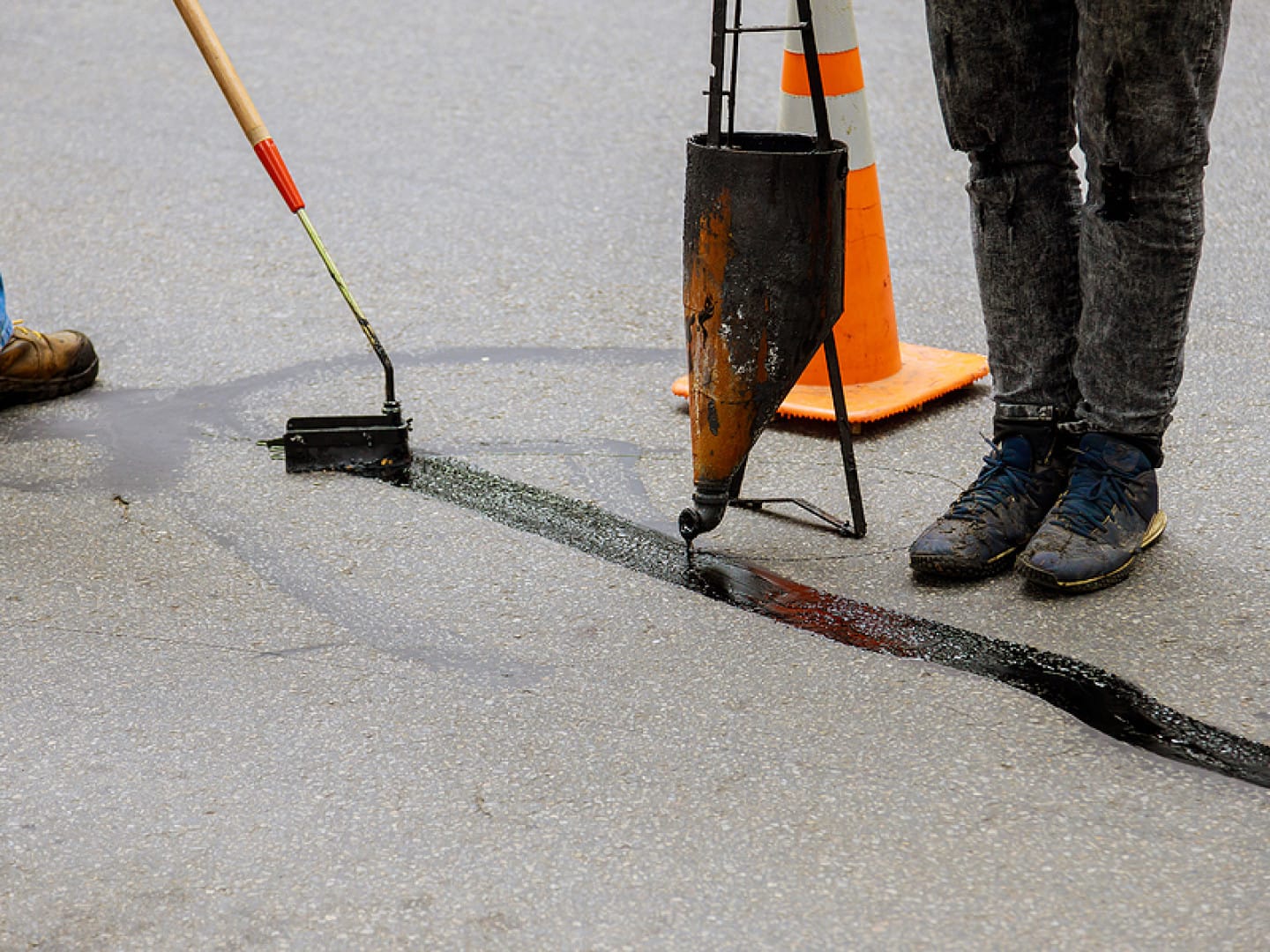
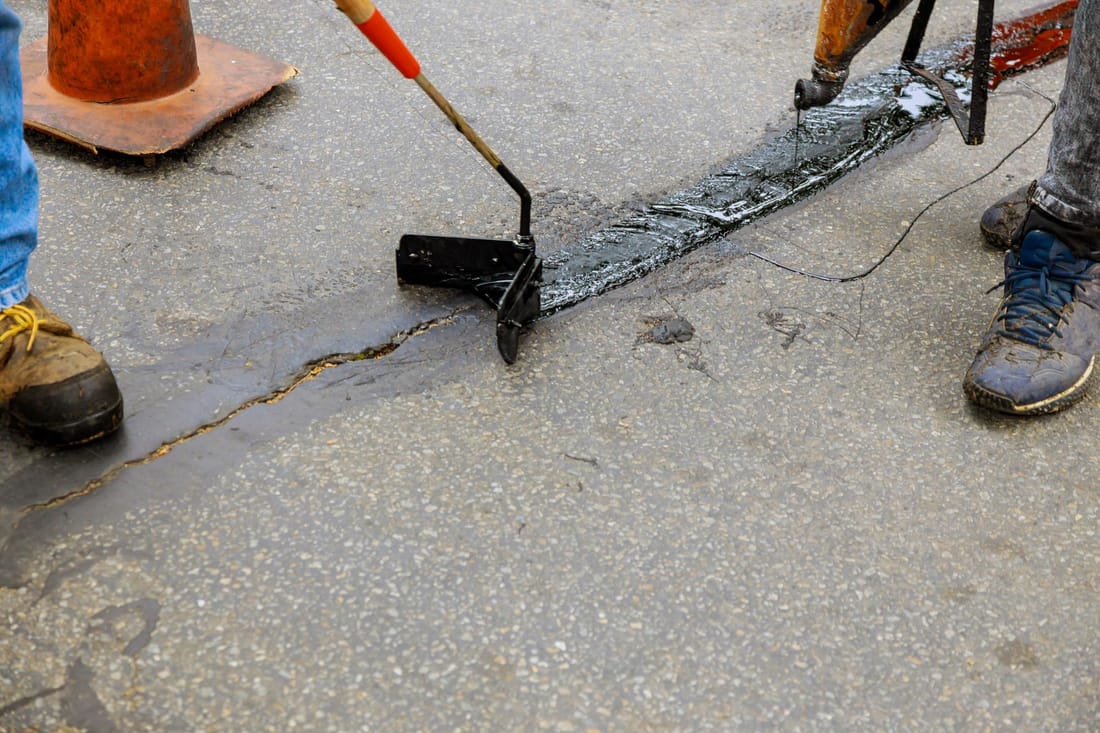
2. Crack routing and filling: Before any coating is applied, we address cracks. For working cracks that are opening and closing with temperature, we often use a hot rubberized crack sealant. On some smaller residential driveways where budget is tight, we may recommend a cold pour crack filler as a more economical option but we will explain the difference in lifespan. Wider cracks may be lightly routed or squared off so the sealant bonds on both walls.
3. Edging and protection: We tape or cut in along concrete curbs, brick borders, and utility covers, and in neighborhoods like North Hills or Five Points with decorative edging, we are especially careful to keep sealer off adjacent surfaces. We set out cones, tape, and signage where needed for traffic control.
4. Sealer application: We typically use a coal tar or asphalt emulsion sealer, depending on local regulations and customer preference. For most commercial parking lots, we use spray application for consistent coverage, then back-roll in high-wear areas. On driveways with slope or heavy shade, we may choose a squeegee application or a two-coat system to control thickness and reduce streaking.
5. Curing and reopening: In Raleigh’s humidity, cure times can vary. During hot, dry weather, driveways can often be opened to car traffic in 24 hours. In cooler or damp conditions, we may recommend 36 to 48 hours. We clearly mark off the area and leave written instructions so family members, tenants, or customers know when it is safe to drive and park again.
Crack Filling That Protects Against Raleigh’s Weather
Crack filling is the most important part of protecting asphalt in central North Carolina. Tiny hairline cracks can turn into potholes within a couple of winters if water gets in, freezes, and expands. Precision Asphalt Raleigh focuses on sealing these openings tightly so moisture cannot reach the base.
We inspect and categorize your cracks. Linear cracks that follow the length of your driveway are usually from normal aging and traffic. Alligator cracking, a pattern that looks like reptile skin, often indicates base or subgrade issues. We will be honest if an area is beyond simple crack filling and needs patching instead.
For active cracks, we typically use a hot-applied rubberized sealant heated in a specialized melter and applied with a wand. This material stretches in summer heat and contracts in winter chill so it does not pop out quickly. Before filling, we clean the cracks with compressed air and wire brushes, and if needed, we rout them to create a uniform reservoir. This extra step helps the material lock in, which is especially important on commercial lots in busy areas like Glenwood Avenue or Capital Boulevard where traffic wear is high.
On residential driveways with lighter traffic, we may use a high-quality cold pour crack filler for smaller openings. We still focus on proper cleaning and overbanding (a slight band of material on either side of the crack) to shed water away. After filling, the crack sealant is allowed to cool and set up before we apply the sealcoat, so the two systems work together as one barrier instead of competing layers.
Materials and Options for Your Sealcoat
Not every property in Raleigh needs the same sealer or application method. At Precision Asphalt Raleigh, we walk you through your options so you understand what is going on your pavement and why.
Sealer types: We primarily work with two categories, refined coal tar and asphalt emulsion. Coal tar sealers are very resistant to petroleum drips and are often preferred for gas stations or busy commercial parking lots where oil and fuel spills are common. Asphalt emulsion sealers are lower odor and can be a good choice in residential neighborhoods, schools, and medical facilities. Local rules and HOA covenants sometimes influence this choice and we make sure our recommendations comply.
Additives and sand: For most parking lots and sloped driveways, we recommend adding silica sand and latex additives to the sealer. Sand improves traction and helps resist wear in tight turning areas like drive lanes at apartment complexes. Additives can speed curing, deepen color, or increase flexibility. We adjust the mix design based on your pavement condition and use, not simply a standard formula.
Number of coats: A typical residential driveway in good condition can often be protected with a single uniform coat. Older or more porous asphalt might need two coats for a consistent finish and better seal. Commercial lots with high traffic are usually planned as a two-coat system, applied in perpendicular directions, to reduce tracking and ensure coverage in low spots.
Striping and markings: If your project includes a parking lot, we can re-stripe after the sealcoat cures. We follow City of Raleigh and ADA guidelines for stall width, accessible spaces, and signage. This is a good time to correct worn or confusing layouts that cause traffic backups or unsafe pedestrian routes.
What Affects Cost for Asphalt Sealcoating in Raleigh
Homeowners and property managers often ask what drives the price of asphalt sealcoating and crack filling. Precision Asphalt Raleigh provides transparent estimates that spell out the main cost factors so you can compare apples to apples.
Surface size and layout: Square footage is a big driver, but layout matters too. A simple straight driveway costs less per square foot than a tight, curving drive with islands or multiple parking bays that requires more handwork. Parking lots with many islands, light poles, and landscaped areas require more cutting in and edging.
Condition of the asphalt: Pavement that is relatively smooth and intact needs standard cleaning and one set of crack repairs. Lots with heavy cracking, oil-saturated areas, or raveling will require more prep, more crack material, and sometimes patching before we can sealcoat. We always separate patching and structural repairs from basic sealcoating in your quote so you can see exactly what you are paying for.
Material choices: Coal tar versus asphalt emulsion, single coat versus double coat, and any additives all affect cost. We explain the pros and cons along with long-term maintenance implications. In many cases, a slightly higher upfront cost for better materials and two coats can extend the reseal cycle and save you money over ten years.
Access and scheduling: Projects that can be done in one mobilization with good access are more economical. If a busy commercial lot in downtown Raleigh requires work in phases at night or over multiple weekends to keep businesses open, the extra trips and traffic control will raise the cost. We plan with you in advance to strike the right balance between budget and minimal disruption.
Timing, Maintenance, and What to Do After Sealcoating
Good timing and simple ongoing care will help you get the most from your new sealcoat and crack filling work. Precision Asphalt Raleigh helps you plan around Raleigh’s typical weather patterns and your daily schedule.
Best seasons to sealcoat: In our area, the main sealcoating season runs from roughly April through October, when surface temperatures and overnight lows stay warm enough for proper curing. Occasional early spring or late fall projects are possible when the forecast is right, but we avoid sealing right before a cold snap or days of rain. If you are planning around HOA deadlines or tenant moves, it is smart to schedule several weeks ahead.
Traffic and use: After sealcoating, keep car traffic off the surface until we tell you it is ready. Avoid sharp turns while stationary, such as turning the steering wheel in place, during the first week, since that can scuff fresh sealer. For commercial sites, we can stage work so that half the lot remains open while the other half cures.
Ongoing maintenance: Sweep your lot or driveway regularly so grit and leaves do not trap moisture. Address small oil spills promptly with absorbent and mild detergent. If new cracks appear after a tough winter, have them filled instead of waiting for the next full sealcoat cycle. For most residential driveways in Raleigh, a 3 to 4 year reseal cycle is typical. Heavily traveled commercial lots may benefit from a 2 to 3 year interval, depending on traffic and exposure.
Warranty and follow up: We stand behind our workmanship. If you notice an area that looks like it is not curing correctly or a crack that reopens soon after the job, we want to see it. Local ownership means you can reach us and we can return to evaluate and correct issues when needed.
Why Work With Precision Asphalt Raleigh for Sealcoating
Choosing someone to sealcoat your asphalt is about more than a low price per square foot. The quality of prep, materials, and application will decide how your driveway or parking lot looks and performs in two or three years.
Precision Asphalt Raleigh is locally based and our crews work only in this region, so we know how Raleigh’s clay soils, summer sun, and winter freeze-thaw patterns affect asphalt. We see the same neighborhoods and shopping centers year after year and we adjust our methods based on what actually holds up here, not generic manufacturer charts.
We never water down material to hit a low bid. Your estimate will spell out the material type, mix design, and expected number of coats. We show up with dedicated equipment for cleaning, crack filling, and sealing, and we do not rush drying times just to move on to the next job. Communication is straightforward, from clear scheduling to traffic control plans and what to expect on the day of service.
Whether you manage a retail center on Falls of Neuse Road, an office park near Research Triangle Park, or a family driveway in a Raleigh subdivision, our goal is the same: extend the life of your asphalt, keep it safe and attractive, and give you a clear maintenance plan you can budget for over time.