Home › Asphalt Pathways, Sidewalks, and Trails
Connect people and places with asphalt pathway paving in Raleigh, NC. We build smooth multi use trails, sidewalks, and greenway paths that are comfortable for walking, jogging, and biking with proper drainage and transitions.
Precision Asphalt Raleigh provides professional asphalt pathway paving throughout Raleigh, NC, North Carolina and the surrounding area. Our licensed, insured crew delivers safe, clean, on-time work with a free estimate before anything begins. Call (984) 254-6287 or request your free quote.
Durable Asphalt Pathways, Sidewalks, and Trails in Raleigh
Neighborhoods in and around Raleigh are connected by a mix of older concrete walks, gravel cut-throughs, and newer greenway segments. When those surfaces crack, puddle, or become uneven, they are not just inconvenient, they are a liability. Precision Asphalt Raleigh focuses on asphalt pathway paving for homes, HOAs, schools, churches, and commercial properties across Wake County, with designs that fit our local soils, tree growth, and weather patterns.
Asphalt is often the best choice for pathways, sidewalks, and short trails in Raleigh because it is flexible and can handle our clay-based soils and freeze-thaw cycles better than brittle concrete. Properly built asphalt paths resist root intrusion longer, drain water more effectively, and are comfortable for walking, jogging, strollers, wheelchairs, and bikes. Our team listens first. We walk the route with you, talk about how the path will be used, and point out any drainage or grading issues that could cause problems later.
Whether you want a simple asphalt sidewalk tying a driveway to a front porch in North Raleigh, a walking loop around a subdivision pond in Garner, or a multi-use path connecting parking areas to ball fields in Knightdale, we design the pavement structure to fit that specific use instead of applying a one-size-fits-all standard.
How We Design and Build Asphalt Pathways That Last
Successful asphalt pathway paving in Raleigh starts with what you cannot see: the subgrade and base. We begin by stripping sod and organic material, then proof-rolling the soil to identify soft spots. In many Raleigh neighborhoods, especially where red clay holds water, we undercut weak areas and replace them with compacted stone so the path does not settle or rut.
We typically install a graded aggregate base, compacted in thin lifts with a plate compactor or roller, depending on access. For lighter-use residential walkways we may recommend a 4 inch stone base and a 2 inch asphalt surface layer. For HOA trails, school campuses, or greenway connectors that will see maintenance carts and utility vehicles, we often increase base depth and may use a 2 inch binder course plus a 1.5 inch surface course for added strength.
Path alignment and slope matter just as much as thickness. Our crews set grades so that water sheds off the pavement, usually with a 1 to 2 percent cross slope, and we look for low spots where puddling would freeze in winter or grow algae in summer. In shaded areas near creeks or wooded lots, we may steepen slopes slightly or add side swales so water does not linger on the walking surface. For routes near foundations or basements, we carefully maintain positive drainage away from buildings.
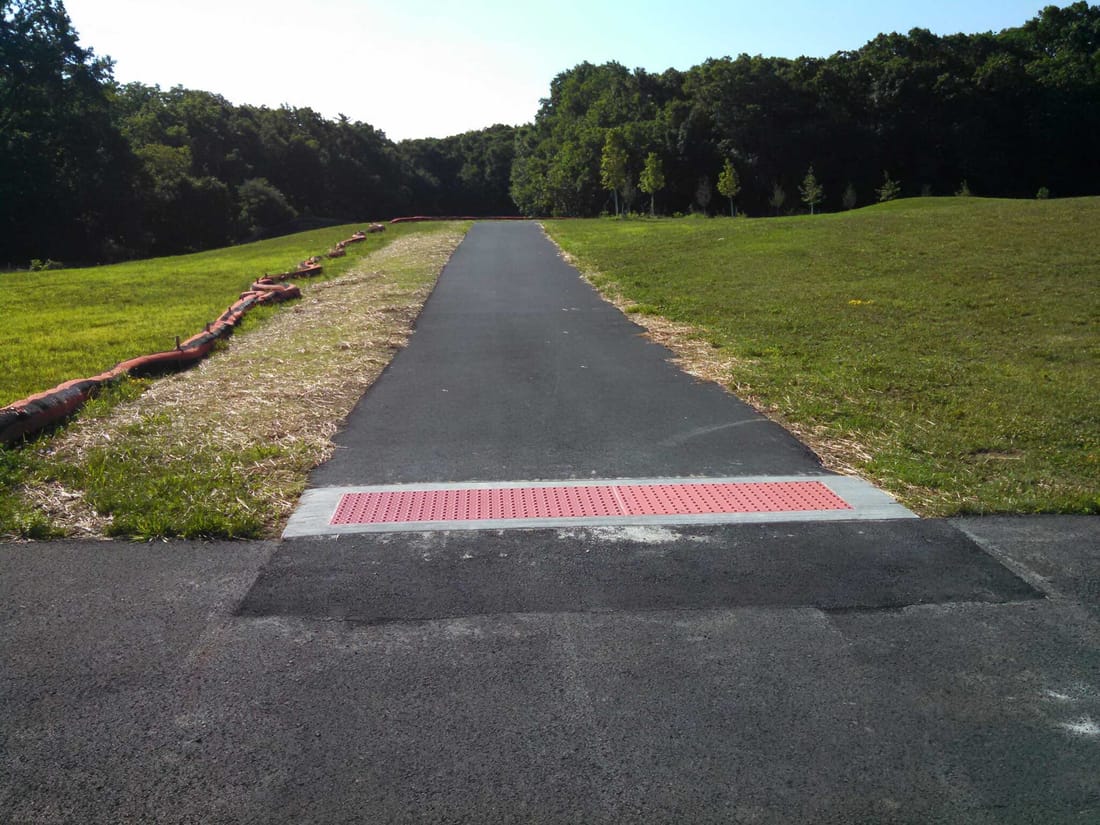
After compaction, we pave with hot-mix asphalt from reputable Raleigh plants, timed so the mix arrives at the right temperature. Edges are hand-shaped and compacted to form a tight, smooth transition to grass, mulch, or adjacent concrete. Where needed, we install concrete aprons at street tie-ins or curb ramps to comply with local standards and to handle the repeated turning of vehicle tires.
Design Options: Width, Layout, Accessibility, and Finishes
A practical asphalt pathway design starts with who will use it. For a narrow side-yard connector or backyard path around a home in North Hills, a 3 to 4 foot wide walk may be plenty. For HOA walking loops, church campuses, or business parks where people walk side by side, we typically recommend 5 to 6 feet. Heavier-use multi-use paths that share space with joggers, bikes, and strollers sometimes go to 8 or 10 feet.
We shape curves with generous radii whenever possible, which is easier on strollers and bikes and looks more natural in landscaped yards. Sharp bends that cut too close to large oaks or maples are avoided when possible, since Raleigh tree roots are a common cause of heaving. If a tree must stay close to the route, we may adjust grades, thicken base, or install a root barrier to slow damage.
Accessibility is a priority. For public-facing sidewalks and trails we follow ADA intent, limiting slopes where possible, softening transitions, and setting flush tie-ins at driveways and curb ramps. Around older properties in central Raleigh where existing slopes are steep, we look for practical alignments that reduce tripping hazards even if full ADA compliance is not legally required.
Surface finish can be tailored to the setting. A standard machine-laid asphalt surface is smooth enough for wheelchairs and skates. In wooded or damp areas, we sometimes specify a slightly coarser surface mix to improve traction when leaves or pollen collect on the path. If you want a more upscale look, we can install neat asphalt edges, coordinate with border plantings, or blend the walk into decorative concrete at entry points.
Project Steps: From Site Visit to Finished Path
When you contact Precision Asphalt Raleigh about asphalt pathway paving, we usually start with a site visit rather than an estimate by satellite view alone. Raleigh properties vary a lot in slope, drainage, and tree coverage, and those details drive both design and cost. We walk the corridor, take measurements, note elevation changes, existing utilities, and potential conflicts like irrigation lines or shallow roots.
Next, we provide a written proposal that breaks down scope, such as clearing and grubbing, base preparation, asphalt thickness, any concrete tie-ins, and optional items like striping or railings if they are needed. For HOAs or commercial clients who must present plans to a board, we can supply simple route sketches and cross sections that explain what is being proposed.
On paving day, access and protection of surrounding areas are a priority. Our crews use smaller machinery for tight backyards or between townhomes to reduce turf damage and avoid fences or AC units. Where we cross existing lawns or landscaping, we place plywood or mats when feasible. Old failing paths are removed, and we haul debris off site to appropriate facilities.
After asphalt installation and final compaction, we walk the finished route with you to check for smooth transitions at steps, driveways, or existing concrete pads. If there are any concerns, such as a lip you think might catch a stroller wheel or a spot where you expect puddling, we address them before we leave. For most residential or small HOA projects, the path can be walked on within 24 hours, but we may recommend holding off on heavier service carts for 2 to 3 days to allow early curing.
Costs, Common Problems, and Maintenance in the Raleigh Climate
Pathway and sidewalk project costs in Raleigh vary mainly with length, width, excavation depth, and accessibility. A short, straight residential walk that is easy to reach is much less per foot than a winding HOA trail around a retention pond that requires tree clearing, drainage improvements, and hand work. Soil conditions are also a major driver. If test cuts show soft or saturated subgrade, we have to remove and replace more material to avoid future settling.
Tree roots are one of the most frequent problems we see on older Raleigh paths. Where root systems are already causing upheaval, we may suggest realigning the path, installing thicker base, or in some cases switching to a slightly raised section to bridge over the worst root zones. Simply grinding and repaving over root damage rarely lasts.
Drainage issues are another concern. Low points next to driveways, near downspouts, or at the base of hills often show alligator cracking and potholes because water sits on or under the pavement. In those areas, we may cut in swales, add underdrains, or regrade shoulders so water has a clear route away from the path. Addressing these details during installation is far less expensive than repeated patching.
Maintenance for asphalt pathways in Raleigh is straightforward if you stay ahead of problems. Light sealing every few years can slow UV and water damage, especially in full-sun sections. We recommend monitoring for small cracks and having them filled before water intrusion leads to base failure. For HOA and commercial clients, we can set up a periodic walk-through schedule so we catch early signs of movement, rutting, or root pressure. With the right base and occasional maintenance, an asphalt path can deliver 15 to 25 years of service in our climate.
Why Work With Precision Asphalt Raleigh for Pathways and Trails
Asphalt pathways, sidewalks, and trails are not just smaller versions of parking lots. They require a different approach to grading, edge support, user comfort, and accessibility. Precision Asphalt Raleigh has dedicated crews that regularly build and repair walkways in established Raleigh neighborhoods, new subdivisions, school sites, and church properties, so we understand how to balance durability, appearance, and budget.
We are familiar with Raleigh and Wake County expectations for public-facing routes, including typical widths, tie-ins at city sidewalks, and coordination with inspections when required. For private residential paths and HOA walks, we take time to understand how homeowners actually use the space, whether it is daily dog walks, kids biking to a pool, or seniors who need smooth, predictable surfaces.
Our goal is to leave you with a pathway or sidewalk that feels natural on day one and still performs after years of rain, humidity, and foot traffic. By focusing on subgrade preparation, drainage, and thoughtful layout, we help you avoid the most common failures seen on older local paths. If you are planning a new asphalt pathway paving project anywhere in the Raleigh area, we are happy to meet on site, share local examples similar to what you are considering, and outline options that fit your property and long-term plans.